
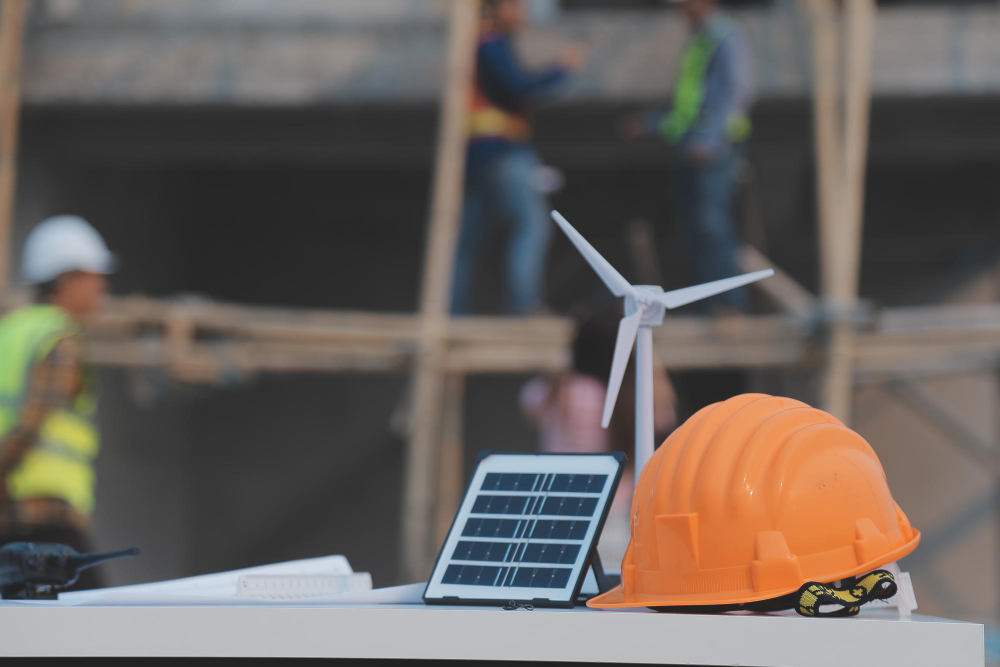
Retain talent for long-term projects: In France, HR in energy is no longer competing only for technical talent. It is competing for permanence, continuity, and critical knowledge.

France is entering an energy phase that completely changes the logic of Human Resources. The country is not only continuing to consolidate renewables. It has also announced the construction of 6 reactors before 2035, with the possibility of 8 more, and is seeking to extend the lifespan of existing assets to 50 or even 60 years within its 2026–2035 plan. When a market combines multi-technology expansion with long-horizon infrastructure, the HR challenge stops being about filling vacancies quickly. The real challenge becomes something else: how to retain talent for projects that require permanence, knowledge transfer, and operational continuity.
For years, many HR teams have designed their strategy around relatively short cycles. Recruit, onboard, stabilize, recruit again. That model may work in sectors with high turnover or more fragmented projects. In energy, and especially in a context like France, that logic is starting to fall short. When execution depends on complex assets, long timelines, and the coexistence of multiple technologies, losing key talent is no longer just a replacement issue. It becomes a continuity loss.
Talent retention in long-term energy projects
The most common mistake is to think that retaining talent simply means preventing resignations. In reality, in long-term energy projects, retaining talent means protecting execution capacity. It means preventing technical knowledge from leaking at critical moments, avoiding constant restarts in the learning curve, and reducing the hidden cost created when people who already understand the system’s complexity leave the organization.
This is where the human capital document offers a very useful guide. It states that people today expect economic stability, decent work, growth, purpose, recognition, and trust from their employer, and that only 21% are truly engaged. It also stresses that organizations must offer holistic well-being, autonomy, learning opportunities, and clear career paths in order to generate real loyalty. In an energy market like France, this stops being an aspirational culture conversation. It becomes an operational condition.
If a company knows that part of its growth depends on projects that will take years, on assets with extended life cycles, and on teams that must operate under high technical and regulatory standards, then HR cannot design its value proposition as if it were retaining talent for short cycles. It has to think in terms of permanence.
Why France requires a different HR logic
France offers a different case from other markets. It is not focused on adding just one technology. It is structuring an energy mix where nuclear, renewables, and energy independence converge as a long-term policy. That combination changes the kind of risk HR needs to manage.
In this context, turnover does not only affect a vacancy. It can affect knowledge transfer between project stages, the stability of technical teams, continuity in critical processes, and the internal maturation curve of the organization. When assets are more sophisticated and timelines are longer, every departure weighs more. HR needs to read that cost differently.
This is also where another idea from the human capital document becomes useful: plan talent strategically, prioritize the 20% of roles that generate 80% of the results, build succession, and map competencies according to the real business strategy. For France, that means HR should not treat every role the same way. There are positions that require continuity and permanence because they concentrate knowledge, coordination, or long-term execution capacity. Those are the ones that need to be protected first.
How to design a permanence strategy
The first practical shift is to stop measuring retention only as a general percentage. In long-term projects, HR needs to identify which roles cannot rotate without affecting continuity. The goal is not to retain everyone equally. It is to distinguish which profiles sustain technical knowledge, operational memory, or critical leadership within execution.
The second shift is to build visible career paths. A lot of talent leaves not only because of salary, but because people do not clearly see how to grow inside the project or the organization. In long-horizon energy projects, this matters even more. If someone feels they will spend years inside the same structure without evolution, the company runs a high flight risk. HR needs to translate permanence into real progress: milestones, learning, internal mobility, new responsibilities, and tangible recognition.
The third shift is to design succession before it becomes urgent. In complex sectors, depending on a single person in key functions is a vulnerability. The human capital document insists on creating solid succession processes and mapping critical competencies. In France, where part of energy execution will be shaped by extended timelines and technical continuity, this should not be seen as an optional best practice. It should be seen as organizational protection.
What HR can implement today
The most useful implementation is more concrete than it seems. HR can start by making three decisions. First, identify five or six roles where a departure would create the highest continuity cost. Second, review whether those profiles currently have a clear path for permanence, growth, and recognition. Third, build a succession or knowledge-transfer scheme before resignation appears.
Another powerful implementation is to review whether the employee experience is designed for short cycles while the business already operates in long cycles. Many companies still manage talent as if all roles were easily replaceable. In complex infrastructure markets, that is no longer true. Some roles need more stable ties to the organization because permanence itself creates value.
It is also worth abandoning the trap of improving what no longer works. The human capital document makes this point clearly: many organizations optimize obsolete processes instead of redesigning them from scratch. That also applies to HR. If a talent strategy were built today for an energy market like France, it probably would not repeat the same metrics, incentives, and career structures designed for shorter projects.
Retention as competitive advantage
The core lesson is simple. In France, the energy transition will not depend only on engineering, investment, or regulation. It will also depend on how well companies can retain the people who make that execution possible over many years.
That is why HR should no longer measure success only by how many vacancies it fills or how quickly it hires. It should start measuring how well it protects continuity, how much critical knowledge it retains, and which roles it manages to sustain over time without breaking the rhythm of the business.
The companies that understand this first will stop seeing retention as a climate issue and start treating it for what it really is in long-term projects: an invisible infrastructure of execution. That is where HR stops administering people and starts protecting the company’s real ability to deliver what it promises.
This analysis draws on verified sources from the energy sector and current regulatory frameworks. Complete references supporting this content are available in this page.
If your organization requires specialized consulting in energy sector recruitment, our team of advisors is available to assess your specific needs and design strategic human capital solutions.
Retain talent for long-term projects: In France, HR in energy is no longer competing only for technical talent. It is competing for permanence, continuity, and critical knowledge.