
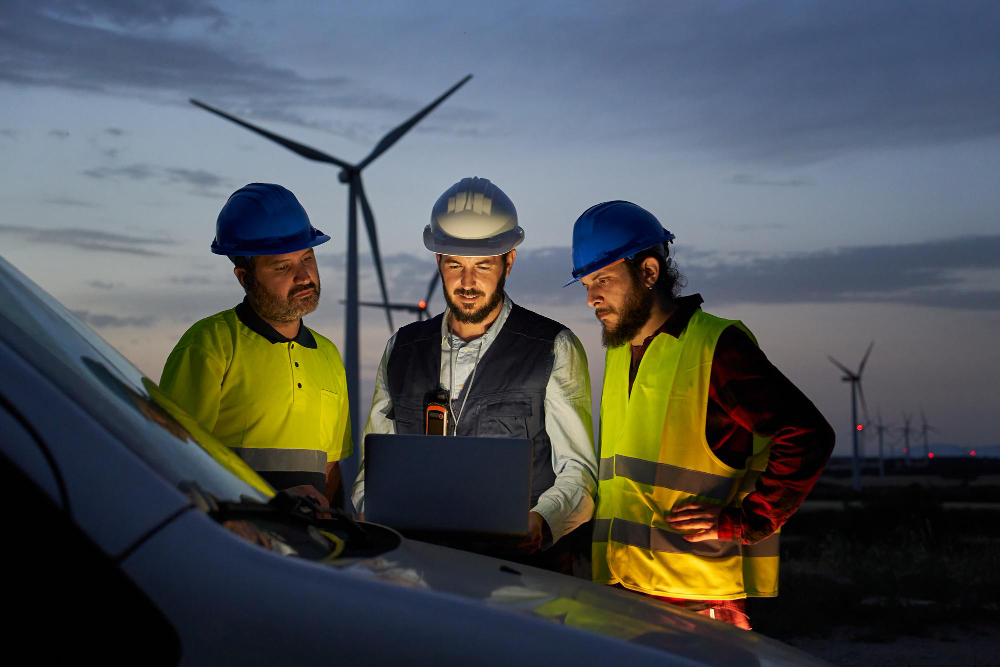
Green Hydrogen: The Profile Chile Urgently Needs: Chile has 83 green hydrogen projects announced, but the talent to operate them is scarce. Discover which profiles are critical and how to recruit for a nascent industry.
An Industry That Grows Before Its Talent Does

Chile faces an industrial opportunity without precedent in its recent history. With 83 announced green hydrogen projects, a portfolio valued at over 50% of its GDP and an estimated export potential of 13.355 billion dollars annually, the country is building a global-scale industry from scratch. The challenge is not in the vision or the investment. It is in the profiles needed to execute that agenda, profiles that simply do not exist in sufficient numbers in the Chilean labor market today.
The 2025 IPSOS study on energy transition across 14 countries confirms that Chile recognizes a critical urgency in training and capacity building. This is not an isolated perception. It is the signal of a market moving faster than its talent base, one that needs to close that gap before it becomes the primary constraint on its growth.
The Profiles a Nascent Industry Demands First
Recruiting for an industry that does not yet operate at commercial scale is a fundamentally different exercise from conventional talent acquisition. There is no consolidated career path and no local market of candidates with direct experience in industrial green hydrogen production. Profiles are built through transfer from adjacent industries, accelerated training or international attraction.
The first roles to reach critical demand in this sector are process engineers with experience in electrolysis and gas production, specialists in green hydrogen certification and traceability, and professionals with expertise in structuring long-term industrial projects. These profiles require a combination of deep technical knowledge and experience in complex regulatory environments, making them scarce in any market, not only in Chile.
In parallel, business development profiles with experience in energy commodity export markets, green infrastructure financing specialists and executives capable of managing the relationship between public, private and international actors in large-scale projects are emerging with force. These are not roles formed in traditional university programs. They are built through practice, and Chile is still in the early stages of that construction.
How to Recruit for What Does Not Yet Exist
The question facing human resources teams in companies operating or planning to operate in Chile’s green hydrogen sector is how to attract talent for an industry with no local history. Three dynamics are fundamental to addressing that challenge.
The first is broadening the search criteria toward industries with real technical transferability. Natural gas, process mining and conventional electricity generation have professionals with competencies directly applicable to green hydrogen. Identifying those transfers and designing specific development paths is more efficient than waiting for the market to build profiles from scratch.
The second is activating international networks from early stages. Australia, Germany, the Netherlands and Spain have more advanced green hydrogen markets and professionals with real experience in industrial projects. Chile has natural resources, relative stability and strategic ambition, arguments strong enough to compete for that talent if the project’s value proposition is clear and the attraction process is agile.
The third is investing in internal development before scarcity becomes urgent. Organizations that today identify their professionals with the greatest potential for hydrogen specialization and offer them concrete training paths will be better positioned than those that try to hire externally when market demand is already at its peak.
What Chile Can Learn From More Advanced Markets
Markets leading green hydrogen development share one characteristic: they built their talent base in parallel with their project base, not after. Germany integrated specialized technical training into its industrial programs from early stages. Australia developed alliances between universities and companies to create specific profiles for its nascent industry.
Chile has the conditions to replicate that model. The question is whether the private sector and training institutions will act with the same speed at which projects are arriving. Because when the 40 billion dollars currently in environmental review begin to execute, talent cannot be the bottleneck.
This analysis draws on verified sources from the energy sector and current regulatory frameworks. Complete references supporting this content are available in this page.
If your organization requires specialized consulting in energy sector recruitment, our team of advisors is available to assess your specific needs and design strategic human capital solutions.
Green Hydrogen: The Profile Chile Urgently Needs: Chile has 83 green hydrogen projects announced, but the talent to operate them is scarce. Discover which profiles are critical and how to recruit for a nascent industry.