
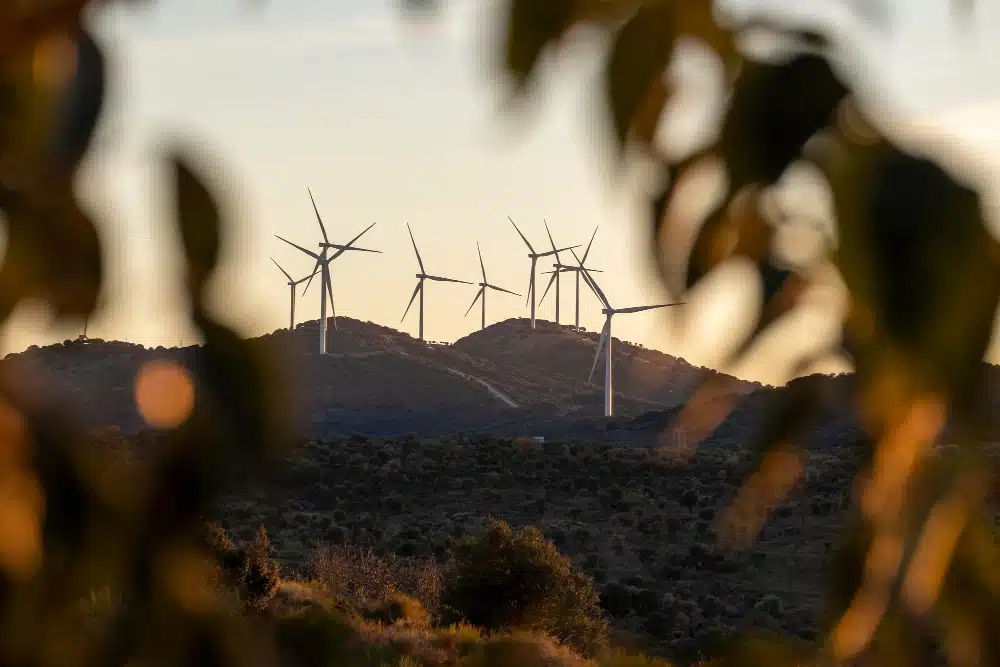
Renewable energy has existed since the beginning of time—it was all we had. Some might argue that, for the sake of the planet, we should never have changed that. However, it is natural that as we evolved, so did our tools and technologies. This evolution is not negative; in recent decades, we have focused on developing technologies that are more efficient than those of the past, to produce cleaner and more efficient energy.
Although fossil fuels have dominated as energy sources in recent years, the most relevant developments in modern renewable technologies began in the 1800s. From 1800 to 1900, major discoveries were made, particularly in the field of wind energy. This led both the United States and Europe to employ a portion of their populations in the installation of at least 6 million windmills and turbines. Additionally, 77 wind energy companies were established in the U.S., generating even more jobs, and over 5,000 experiments were carried out to improve windmill designs.
During the 20th century, progress expanded to other areas of renewables, but the main focus shifted to solar energy. In the first half of the century, Carnegie Steel Company entered the sector and helped develop one of the first solar battery prototypes. Also, in 1900, the Jacobs Wind Electric Company was founded and has employed people for over 80 years. Furthermore, in Florida, several companies began producing solar water heaters, improving living conditions for around 50,000 households.

While in the second half of the century most wind sector companies in the U.S. went bankrupt, the last 50 years saw the emergence of 20 new solar energy companies—indicating a shift in technology rather than a loss of jobs. At the same time, governments began to promote the use and development of renewable energy, encouraging job creation and scientific research by individuals.
When looking at industrial growth data since 1966, more than half of that growth (56%) occurred after the turn of the century[1]. For instance, global electricity generation from solar and wind increased its share of the energy mix by 6% between 2010 and 2020. During this period, industry jobs grew from 7 million in 2012 to 11 million in 2019.
Job growth in recent years and the drop in renewable energy costs have contributed to the faster adoption of these technologies. By 2020, renewables generated 20% of global electricity. Much of this growth is due to positive feedback loops—renewable energy becomes cheaper and benefits from economies of scale, making it more competitive, which in turn attracts more investment into renewables [2].

This investment—both domestic and international financing for developing countries—has surged in recent decades[3], as seen with investments from countries like Brazil, the U.S., China, and others (see image 3). This can be attributed to national policies or corporate net-zero targets, which also promote learning around renewables, helping to build a better-prepared talent pool. This is also reflected in the graph showing the number of patents registered over the past 10 years—a clear indication of ongoing innovation and development efforts.

Even with the exponential growth of green energy, it may soon stagnate, as seen in the patent chart, and we must accelerate this transition. According to IRENA, if we remain on the current reference path, we will reach a 3°C temperature increase by 2050; the second-best scenario implies that even if we start reducing emissions by 2030, temperatures would still rise by 2.5°C; only by reducing emissions by 3.8% per year would we keep the increase below 2°C. Which scenario are you and your company aiming for? What are you doing to achieve it?
[1] Based on annual percentage change in renewable energy generation – Full dataset from Our World In Data.
[2] According to the World Resources Institute
[3] It’s worth noting that wind and solar have absorbed investment previously directed toward Biomass and Liquid Biofuels technologies, as shown in the “Investment in Renewable Energy by Technology” graph (image 2) from Our World In Data.
Project Solar UK – The History of Renewable Energy: Where It All Began.
Power – History of Power: The Evolution of the Electric Generation Industry
U.S. Energy Information Administration – Renewable energy
First Time In 100 Years U.S. Renewable Energy Consumption Surpasses Coal – Auto Channel
Center for Climate and Energy Solution – Renewable Energy
Our World in Data – Renewable Energy
World Resources Institute – Explaining the Exponential Growth of Renewable Energy